
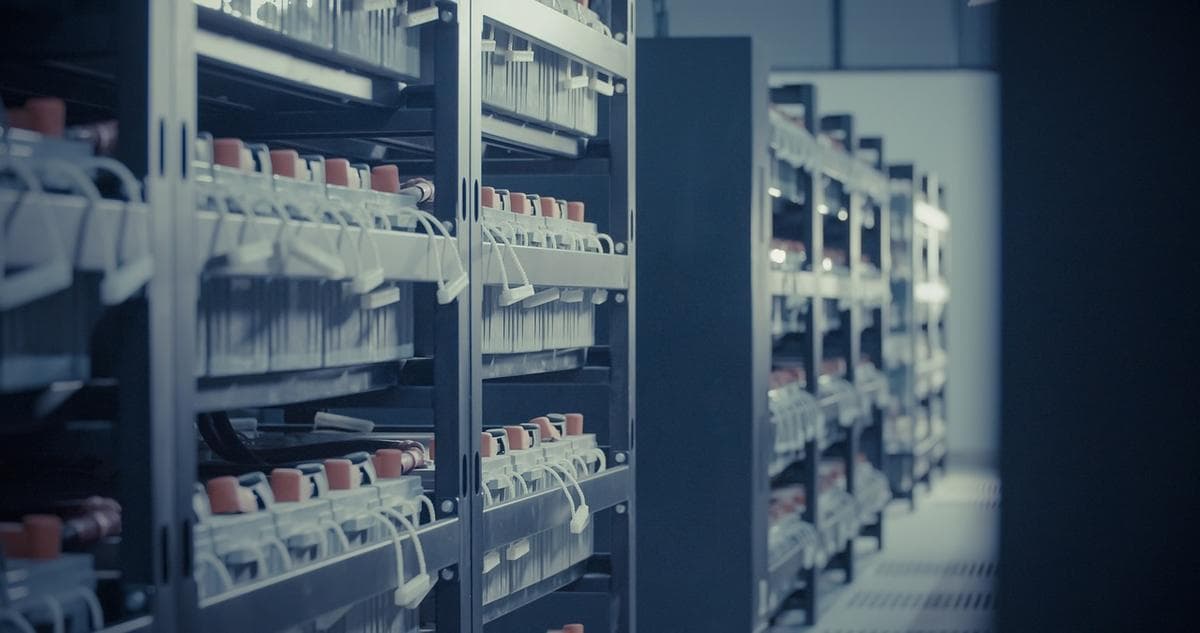
Mark Zuckerberg’s company drew sharp criticism after it scaled back pledges to add between 300 and 500 new positions to staff a subsidiary’s planned data center in Richland Parish, Louisiana.
State regulators voted to fast-track approval for three natural gas turbines that will supply power to the enormous site. The complex will span roughly 4 million square feet and is expected to need more than 2 gigawatts of electricity when fully operational.
On August 20 the Louisiana Public Service Commission approved construction of the plants by a 4–1 margin. Entergy Louisiana will own and operate the units. Members of the public who testified against the project said the commission moved too quickly and raised alarms about rising utility bills and local water supplies. Records show state officials agreed to offer tax breaks and other inducements to the company without a firm, written guarantee of full-time jobs for local residents.
Opponents said the schedule was compressed. Entergy filed its application in 2024, and the vote could originally have been scheduled for October so the commission’s administrative law judge would have time to issue additional recommendations. Entergy sought to accelerate the timeline, asking that the vote be held in August on the claim that parties who had earlier opposed the plan had reached an understanding. That rescheduling left little opportunity to alter the deal.
Critics raised another financial worry: the agreements do not include an explicit cap on how much Entergy may recover from customers to pay for the construction of the gas plants and the transmission line that will deliver energy to the data center. Meta agreed to finance the first 15 years of a 30-year loan for the gas plants, yet utility ratepayers will shoulder the cost of the new transmission line. Opponents pointed out that very large AI-focused data centers can drive big increases in local electric bills.
“We wanted the commissioners to attach conditions and reasonable safeguards, such as a cost cap, but they instead came to this extremely disappointing and baffling decision,” says Paul Arbaje, an energy analyst with the Union of Concerned Scientists, a group that opposed the Entergy filing.
When commissioners debated the approval, Entergy and state economic development officials highlighted Meta’s projected investment and hiring figures. Company projections given to officials estimate about $10 billion in capital investment and between 300 and 500 jobs that would pay well. Entergy’s 2024 application noted local economic distress, saying Richland Parish has low income levels and that one in four residents lives beneath the federal poverty line.
“There has never been a better time to lift our residents out of poverty. There has never been a better time to give people in our region better jobs,” said Rob Cleveland, the CEO of Grow NELA, an economic development group representing northwest Louisiana, during the hearing.
State lawmakers moved quickly in recent months to adjust rules to attract the project. Authorities rewrote zoning and altered a broadband tax rebate into a data center tax exemption in late 2024, a shift that local leaders credited with helping secure the company’s interest. The public had limited time to review the state’s package of incentives. Meta itself was not required to appear at the hearings on Entergy’s request, though the turbines, a new $550 million transmission line and upgrades to a local substation are being built for the company. The transmission line and substation upgrades were approved by the commission on August 20. Critics say the line is being paid for by Louisiana ratepayers.
Requests that Meta provide supporting documents met resistance. Groups opposed to the project say attempts to compel the company to release records failed, including a subpoena effort in July.
A tax incentive contract signed by the state last fall and reviewed by reporters does not compel Meta subsidiary Laidley, which is listed as the developer, to prioritize hiring locally. The contract does require that jobs be performed on site. Entergy, meanwhile, said Meta sent a letter to the Louisiana Public Service Commission in April stating it would make “a concerted effort” to hire locally; that wording is not legally binding.
The incentives agreement uses a nonstandard definition of “full-time job.” It allows a “full-time” role to be met by combining multiple part-time positions that together total a 40-hour workweek. Meta must reach the equivalent of 500 of these “full-time” roles by 2035 to qualify for the most generous level of tax relief, which the agreement frames as an 80 percent reduction on the full amount. The contract says the jobs must provide health insurance and that average pay across positions should equal about $82,000 per year. The state will also charge Meta an administrative fee equal to $10,000 for every $1 billion the company spends in Louisiana.
“Meta is expected to create 500 direct new jobs at the facility, which in economic development terms means permanent, full-time jobs,” says Kevin Litten, a spokesperson for the state economic development authority, repeating the agency’s public expectation.
Entergy drew criticism from advocacy groups for offering little detail on what types of positions the company’s estimates reflect and how the 300–500 figure was calculated. The utility, in communications to reporters, pointed to an economic-impact study from Grow NELA but declined to answer additional questions about the hiring assumptions.
“We continually asked for analysis with how they came up with this number of jobs, and Entergy has no idea about how many people will be hired,” says Susan Stevens Miller, an attorney representing the Union of Concerned Scientists and the Alliance for Affordable Energy, both of which objected to Entergy’s application.
In a filing dated August 7, Entergy urged regulators to move quickly on a final agreement with several stakeholders, arguing that the company and the broader tech sector value a rapid timeline for projects and that the commission can move at that speed while balancing the needs of other customers. The utility said public testimony had been ample and that residents had an opportunity to ask questions. Entergy framed swift action as the difference between landing the project for Louisiana or seeing it go to another state willing to match a faster schedule.
At the August 20 hearing members of the public asked detailed questions about job commitments and community impacts, but they did not receive many new specifics from any of the parties. The agreements between Meta and the state that were provided to reporters are not posted in the commission’s public docket. A short term sheet published last November by an industry magazine set out some hiring incentives, yet the full 93-page contract contains additional clauses that local advocates said they had not previously seen.
Residents raised concerns about the data center’s demand for water and the effects on area farmers. Angelle Bradford Rosenberg, who lives in the region, urged commissioners to consider whether promised jobs would benefit local communities.
“I want local businesses to be thriving,” she told the hearing. “But if the average data center permanent jobs are 12 to 15, and y’all saying it’s going to be 500, do y’all have a promise that they’re going to be local jobs? … Do we actually know that they’re hiring people from Monroe, Rayville, Delhi, Holly Ridge, or are they just saying 500 jobs and they’re bringing in these folks from other places?”
The state’s tax exemption deal does not require local hiring. Litten, the economic development spokesperson, told reporters that separate, statewide tax programs available to all employers do include local hiring conditions. Those programs include the Quality Jobs Rebate, which offers a six percent rebate on payroll expenses, and a successor program known as the High Impact Jobs program.
Kasia Tarczynska, a research analyst at Good Jobs First who studies data center subsidies, says the industry typically fills technical roles with specialists who travel from project to project across state lines. Data centers tend to employ a mix of lower-skilled and high-skilled workers: technicians to manage servers, electricians during construction, maintenance crews, security staff and other support personnel. During build-outs, specialty contractors often bring in electricians and other trained workers from outside the area.
“For this reason, Meta is not the only tech company hesitant to guarantee local hiring when negotiating data center contracts. They know that some of these jobs require skills that people in the local community just don’t have,” Tarczynska said.
Meta gave a written response to questions, offering several assurances about local sourcing. Tracy Clayton, a Meta spokesperson, said, “We make a concerted effort to source labor locally and provide substantial contributions directly to the community.” Clayton added that for short-term construction work, contractors were “working on hiring local talent” and that the company planned information fairs early next year. For permanent roles at the data center, Clayton said the company expected to hire “technical operators, electricians, air-conditioning and heating specialists, logistics staff, security, and more.”
As public land, the property Louisiana is leasing to Meta is exempt from conventional taxes. The lease creates a menu of possible “payment in lieu of taxes” arrangements that let local governments extend tax relief in exchange for other commitments. The agreement includes exemptions from sales and property taxes under various thresholds and timelines.
To qualify for the lowest property tax obligation in the plan, Meta would need to invest $5 billion in the state and reach 300 full-time equivalent jobs, at which point it would pay 40 percent of the assessed property tax. If Meta invests at least $10 billion by December 2032, it would receive the deepest exemption and pay 20 percent of assessed property tax.
The contract sets specific hiring milestones the company must meet to win the top property tax break: 300 full-time equivalents by 2030, 450 by 2032, 475 by 2033 and 500 by December 31, 2034. Separate language elsewhere in the incentive materials says Meta must reach 500 “full-time” equivalents by 2035 to obtain the most generous overall tax break, a target framed in that passage as an 80 percent reduction. These staggered timelines, combined with differing references, left some observers seeking clarification.
Good Jobs First notes that many states offer tax subsidies to data centers and that nearly half of such subsidies nationally impose no requirement that new jobs be created. The nonprofit has compiled data showing at least ten states have data center incentives valued at more than $100 million each, and it estimates those states lose roughly $100 million each in tax revenue tied to data center deals. Texas recently reexamined the cost of a subsidy package and revised a figure for one data center program from $130 million to $1 billion in 2025. Georgia lawmakers proposed a pause on data center incentives in 2024, but governor Brian Kemp vetoed that measure.
The planned site for the Richland Parish campus is Franklin Farms in Holly Ridge, a 1,400-acre tract the state acquired for economic development. The ground lease offered that parcel to Meta for $12 million, which the lease says was the state’s cost to buy and prepare the land. Under the lease, a nominal annual “rent” of $732,000 would count as credit toward the base purchase price; at that rate the company would have effectively covered the purchase cost a little more than 16 years into a 30-year lease.
The lease includes clauses that would raise the price of the property if Meta falls short of investment or hiring targets. For instance, if Meta invests $4 billion instead of $5 billion, the deal suggests the sale price could rise to $19 million. State officials reserved the right to reclaim the land if the company failed to invest at least $3.75 billion and reach 225 full-time equivalents by 2028. Asked whether Meta intended to buy the site outright after the lease term, Clayton said, “We’ll keep you updated on our future plans for this site.”
Meta’s announcement spurred a surge in local land values. A nearby 4,000-acre tract in Holly Ridge listed for $160 million, at $40,000 per acre—more than four times what Louisiana paid per acre for the data center site.
That market ripple has not quieted concerns that the project could be delayed or scaled back. The tax agreement signed with the state makes clear that the timetable for the project will hinge on “numerous factors outside of the control of the lessee, such as market orientation and demand, competition, availability of qualified laborers to construct and/or weather conditions.” Those contingencies give the company room to adjust plans if market conditions shift.
“My general fear is that too many data centers are being built,” Miller says. “That means some of the data centers are just going to be abandoned by the owners.”
Miller warned that if large technology firms scale back investments in these facilities, the market for resale may be thin. “The state could be left holding a warehouse full of computers,” she added.