
The roar of 80,000 fans at Shanghai Stadium on September 21, 2025, went beyond the match between Shanghai Shenhua and Chengdu Rongcheng. It served as a live test of how carriers are trying to turn advanced network capabilities into new sources of revenue, with China Mobile Shanghai’s latest 5G-A offering under a close spotlight.
Huawei invited international media to observe the rollout in person, giving many reporters their first close-up look at Chinese football culture. As waves of blue and white filled the stands and supporters captured highlights on their phones, China Mobile Shanghai’s newly deployed 5G-A monetization plan was being put through its paces, driven by Huawei’s GainLeap solution and upgraded wireless infrastructure.
From the media section it was clear that the technical challenge went beyond capacity numbers: the network needed to let 80,000 people stream, upload, pay, and interact without visible slowdown. Meeting that kind of simultaneous demand called for targeted mechanisms rather than simply adding raw bandwidth.
China Mobile Shanghai became the first carrier in China to roll out a differentiated 5G-A experience package, a move industry observers view as a fresh approach to generating revenue in markets where gaining new subscribers has become difficult. The “5G-A Exclusive Package for Shenhua Football Fans” is designed to convert 5G-Advanced’s flexible performance into benefits users notice and will pay for.
The technology stack behind this push leans heavily on Huawei’s portfolio. GainLeap identifies premium subscribers and steers them into a higher-performing path, while AI-powered intelligent wireless boards handle fast, automatic decisions about how air-interface resources are assigned and managed.
Under the partnership with Shanghai Shenhua Football Club, roughly 200,000 fans can buy an annual bundle that pairs guaranteed network performance with perks tied to matchday life. The package lists 5G-A network acceleration, access to all matches through the Migu streaming service, unlimited video ringback tone downloads, and club merchandise as part of its offer.
China Mobile Shanghai frames the package as an answer to a core industry concern: how to grow revenue quality when subscriber counts have flattened. Instead of relying solely on price cuts or basic service offers, the carrier is creating differentiated experiences for defined communities — in this rollout, football supporters.
At Shanghai Stadium the operator deployed an elastic, scalable setup meant for high concurrent usage. During the September 21 match, when tens of thousands of devices were online at once, subscribers to the 5G-A package were able to reach download speeds of up to 600 Mbps under real conditions.
GainLeap’s role is central to that outcome. The solution recognizes 5G-A plan subscribers on the fly and assigns them a high-speed 3CC (three-component carrier) channel, producing observable performance gaps between standard users and those on the premium tier. That measurable differentiation is the commercial heart of the 5G-A monetization model.
The intelligent wireless boards supplied by Huawei work alongside GainLeap. These boards combine on-board communications functions with embedded artificial intelligence so the network can classify service types, weigh user experience targets, read device profiles, and track resource status in millisecond timeframes. Those rapid decisions let the system prioritize low-latency tasks such as payment and QR scanning at critical moments.
China Mobile Shanghai shared effectiveness metrics from test runs. Reported improvements include QR code scanning latency down by 47%, WeChat upload times reduced by 25%, live-streaming throughput up by 27%, and an 11% rise in the share of video delivered in high definition. Those figures map directly to smoother interactions for fans inside the venue.
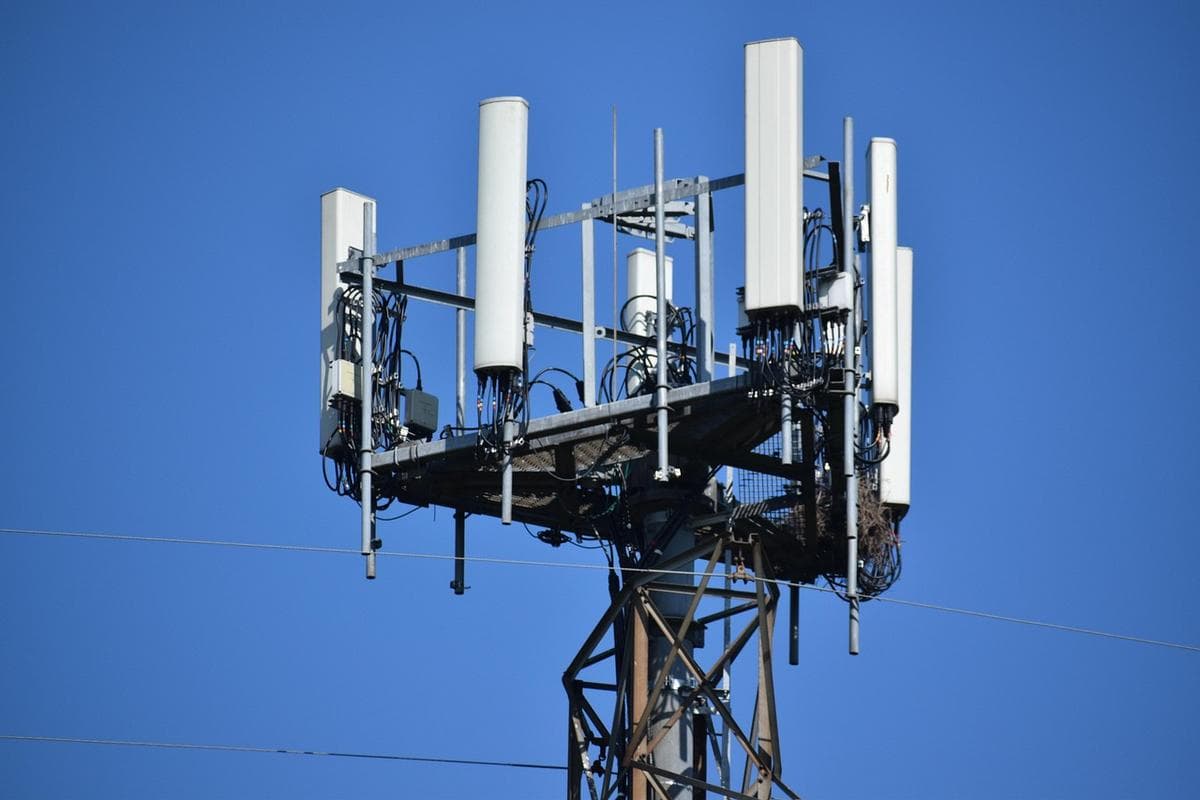
Preparing the stadium required hardware work across seating areas and entrances. The lower stands received 32 new 2.6 GHz and 4.9 GHz pRRUs (passive remote radio units), a change that more than doubled capacity for those sections. Seven escalator entrances were fitted with 4.9 GHz EM devices to clear coverage gaps that used to create dead spots during peak flows.
On match days, a team of more than 40 engineers remains onsite to monitor conditions and make dynamic tweaks. Beyond the venue itself, China Mobile Shanghai reports continuous 5G-A coverage inside the city’s Outer Ring Road, in five newly developed town zones further out, and along 21 metro lines, smoothing the fan experience from journey to stadium to home.
For supporters inside Shanghai Stadium the premium tier showed its value in concrete ways. High bandwidth and business-level service assurances meant faster mobile payments for concessions and merchandise, and reliable, low-latency uploads for user-generated clips. Fans could post highlights and see interactions from friends in near real time even at peak moments when thousands were online at once.
That instant feedback loop — posting a clip, watching likes and comments arrive while still in the stands — is precisely the kind of everyday benefit China Mobile Shanghai is counting on fans valuing enough to subscribe for. Whether the strategy will turn into a profitable business line will depend on uptake and long-term retention, but the September 21 deployment demonstrated the network’s ability to deliver the promised experience.
The experiment brings into focus broader questions about how operators will justify growing investment in 5G and 5G-Advanced infrastructure. Traditional one-size-fits-all plans have struggled to match those capital demands with returns. By offering tiered, community-targeted experiences, carriers can present a differentiated proposition that goes beyond headline speed figures.
This case serves as an early proof that deeper integration of artificial intelligence within network elements can support new commercial models. The intelligent wireless boards’ capacity to take millisecond-level allocation decisions is what makes consistent performance differentiation practicable when demand spikes at scale.
China Mobile Shanghai’s aim of serving 200,000 Shenhua fans creates a measurable yardstick for commercial testing. As operators around the world wrestle with how to monetize increasingly costly upgrades, China Mobile Shanghai’s move toward community-focused, experience-driven packages may provide useful lessons for shifting the industry away from pure connectivity toward more lived, monetizable services.