
An idea that sounds like science fiction has gathered backers ranging from billionaire tech figures to local elected officials, even as major questions remain about whether it can work in practice.
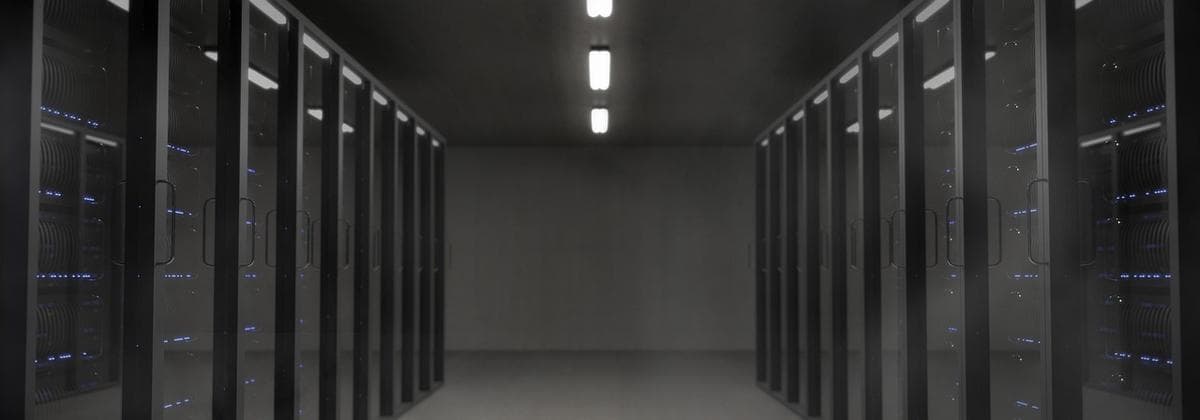
Data centers that power cloud computing and artificial intelligence already place heavy demands on electric grids, produce greenhouse gas emissions, and consume large amounts of water. Analysts estimate that electricity demand from AI data centers could climb by as much as 165 percent by 2030. More than half of the energy feeding many of those facilities still comes from fossil fuels, a trend that could undermine climate progress.
Some leaders in the AI industry argue they have a fix: move massive server farms off the planet. OpenAI CEO Sam Altman told manosphere podcaster Theo Von that he expects data-center growth on a vast scale. “I do guess a lot of the world gets covered in data centers over time,” he said. Altman has suggested the company would pour extraordinary sums into expansion, and OpenAI is part of a group behind the $500 billion Stargate project. He has spoken about committing “trillions” to such efforts.
Altman has discussed an idea borrowed from thought experiments in astrophysics: a Dyson sphere composed of data centers that would surround the sun and capture huge amounts of energy. Building something on that scale would likely demand more raw materials than exist on Earth and could risk severe harm to the planet. Still, less grand visions are attracting investment. Startups including Starcloud, Axiom, and Lonestar Data Systems have raised millions to prototype space-based computing and storage.
The United States already hosts an estimated 5,400 data centers, from tiny facilities to thousand-server “hyperscalers.” The count is rising quickly. Industry projections put data centers’ electricity use as high as 12 percent of U.S. consumption by 2028. The prospect of shifting some workloads off-planet appeals because space-based systems could tap continuous solar power and remove local sources of air, noise, and water pollution from communities that host ground-based centers.
There is technical work behind the notion. Ali Hajimiri, an electrical engineer who runs Caltech’s Space Solar Power Project, filed for a patent on a “massively parallel computational system in space” in 2016. Launch prices have fallen in recent years, to a figure near $1,500 per kilogram by one estimate, while solar panels have grown lighter and more efficient. Hajimiri and colleagues have described a lightweight space solar array that might produce electricity at about 10 cents per kilowatt-hour at large scale, which would be cheaper than some equivalent terrestrial systems. Such an array could theoretically power orbiting server clusters, although Hajimiri cautions about timing. “I never want to say something cannot be done,” he said. “But there are challenges associated with it.”
Those challenges are significant. Devices in orbit face steady streams of cosmic and solar radiation that can corrupt memory and damage electronics. Repairing or upgrading hardware in space would be difficult and expensive, so obsolescence is a real risk for long-lived installations. Performance is another factor: some proposed space-based systems would process data more slowly than comparable ground facilities because of communications latency and other constraints. Hajimiri believes orbital data centers could become practical at some point. “Definitely it would be doable in a few years,” he said. “The question is how effective they would be, and how cost-effective they would become.”
The concept has moved beyond academic papers and speculative interviews. City leaders in places that have resisted land-based data centers have raised space as an alternative. At an August hearing in Tucson, Arizona, city councilmember Nikki Lee made a case that reflected both local frustration and a broader policy question. “A lot of people are saying data centers don’t belong in the desert,” Lee said. She argued that if the nation treats large-scale computing as a priority, federal research and development money should explore off-world options. “If this is truly a national priority,” she told the meeting, “then the focus must be on putting federal research and development dollars into looking at data centers that will exist in space. And that may sound wild to you all and a little science fiction, but it’s actually happening.” The Tucson council voted unanimously to reject a proposed data center.
Early-stage companies have taken tentative steps. Starcloud planned to send a refrigerator-sized satellite containing a few Nvidia chips into orbit in August, though the launch was postponed. Lonestar Data Systems managed to land a tiny data unit on the moon that carried items such as an Imagine Dragons song, but the lander tipped over and the payload was lost. More experimental launches are scheduled in the coming months, offering small demonstrations rather than full-scale service.
Market realities remain a major constraint. Putting heavy hardware into space costs far more than building facilities in regions with low power prices and established infrastructure, such as the Data Center Valley in Virginia, where some estimates suggest power demand could double over the next decade if left unregulated. Firms driven by profit will prefer the cheaper option until orbital solutions can match competitive rates and offer equivalent service levels.
That cost gap is central to a point made by Matthew Weinzierl, a Harvard economist who studies space markets. “Space-based data centers may well have some niche uses, such as for processing space-based data and providing national security capabilities,” he said. He added that to pose a meaningful challenge to terrestrial centers, off-planet operations must be able to meet customers on price and reliability.
Regulatory differences between Earth and space may tempt companies to explore orbital deployments. On the ground, data-center projects typically require municipal permits and face pushback from residents who worry about water use, rising electricity bills, and heat output. The absence of local neighbors in orbit could reduce those obstacles, at least for a time. Michelle Hanlon, who directs the Center for Air and Space Law at the University of Mississippi, warned that the policy environment could change quickly. “If you are a US company seeking to put data centers in space, then the sooner the better, before Congress is like, ‘Oh, we need to regulate that.’”
Analysts offer a cautious reading of likely uses. Some workloads fit natural niches in orbit, such as processing data from satellites or providing hardened systems for defense purposes. For mainstream cloud services and training of large AI models, cost and ease of maintenance remain decisive. Companies that can combine continuous solar energy with lightweight, radiation-hardened servers and low-cost launch logistics might chip away at the advantage of terrestrial centers. For now, space-based data centers are experimental and small-scale.
Industry leaders who speak about vast growth plans for server infrastructure have turned their attention to many possibilities. Jeff Bezos and Eric Schmidt have shown interest in off-planet computing, and investors have funded companies chasing parts of the idea. Whether those efforts move beyond prototypes into full commercial operations will depend on engineering advances, the price of getting mass to orbit, and how policymakers frame the rules for business beyond Earth.
The questions are not merely technical. The materials needed to construct very large orbital structures, and the environmental risks of moving so much industrial activity into space, raise ethical and logistical debates. Proposals that sound like sci-fi prompt public discussion about who decides where computing lives, and about trade-offs between local impacts on communities and broader planetary or extra-planetary consequences.
For now, the most concrete activity consists of small launches and pilot projects that test pieces of the puzzle: lightweight solar arrays, small clusters of chips, and surface experiments on the moon. Those steps will reveal whether the concept can scale and whether it can compete with terrestrial data centers on cost, speed, and reliability. The debate over whether to move more computing off the planet has shifted from theory into trials, with funding from high-profile backers and scrutiny from cities considering projects in their backyards.