
Tech companies poured hundreds of billions of dollars into data centers built to run artificial-intelligence models this year, and the scale of that spending has sharpened questions about whether the facilities can be sustained economically and environmentally. On a recent episode of the podcast Uncanny Valley, hosts Michael Calore and Lauren Goode pressed senior writer Molly Taft, who covers energy and the environment, on how these large computing hubs operate, what interests are driving the build-outs, and which faults are already showing.
The conversation started with a basic technical explainer about why AI services route user requests to remote server farms. Michael Calore asked how a request to something like ChatGPT leaves a laptop and returns an answer within seconds. Lauren Goode described the path: the message goes to the company’s servers, passes through authentication and moderation checks, and lands on hardware that can process the query. The text is split into tokens, then handled by cards and chips designed for parallel computation.
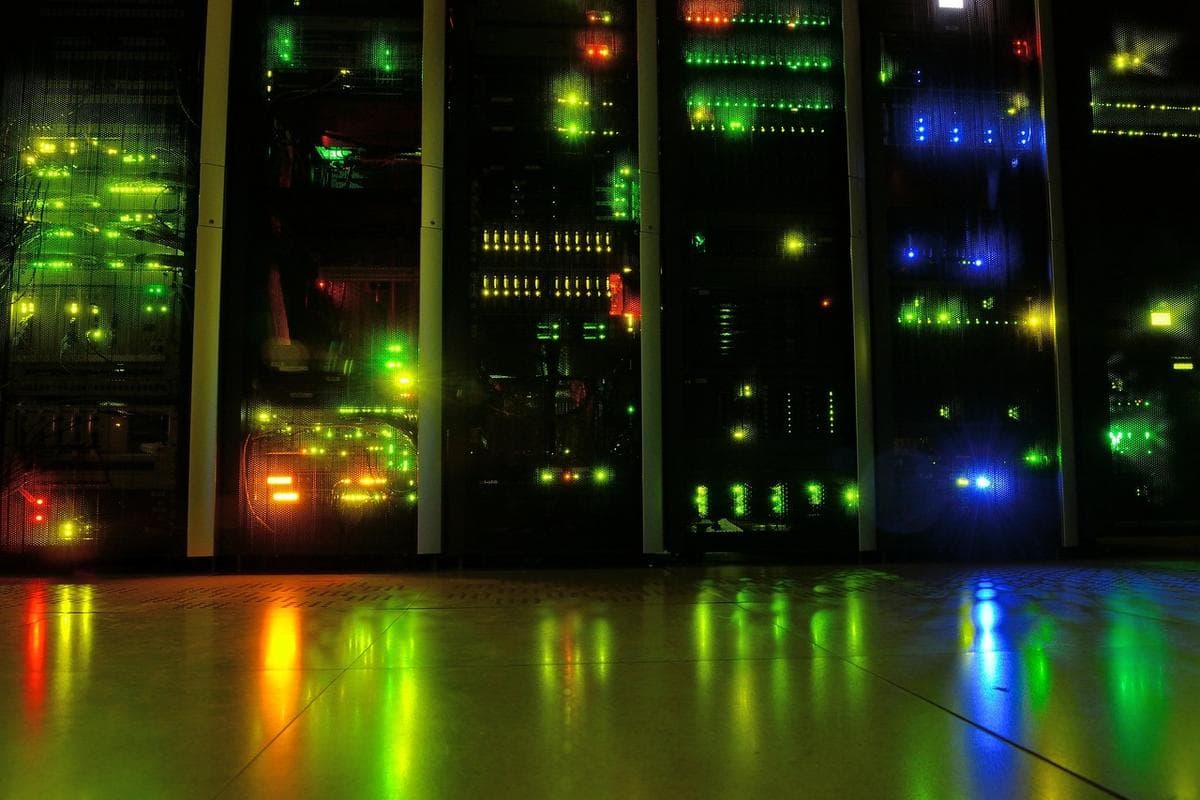
Molly Taft broke down the hardware at the heart of those warehouses. “GPUs,” she said, naming the graphic processing units that have come to dominate AI work, “are essential to AI systems.” The cards excel at running vast numbers of calculations at once. Data centers contain racks of servers packed with those cards; when a query hits a center the model runs what’s called inference time, predicting one token after another until the response is complete, then the result travels back to the user’s app or browser.
That rapid exchange conceals very large energy demands. Taft emphasized that operating a major data center calls for power for compute, cooling systems, networking, and lighting, and that the load varies with traffic. She pointed out how the carbon intensity of a facility depends on the electricity mix it draws from: a center on a grid powered mainly by fossil fuels will emit more greenhouse gases than one supplied with wind and solar. Public disclosures are limited, she warned, because many details are proprietary; reporters and researchers must lean on the information companies choose to release and on regional approximations.
The scale of headline projects helped frame the stakes. Taft cited Meta’s planned Hyperion center in Louisiana, which the company says will total about five gigawatts of capacity. “That’s about half the peak power load of New York City,” she said. Other facts grabbed attention in international reporting: in Ireland, for example, data centers already account for more than 20 percent of national electricity usage. State-level trends inside the United States showed similar pressure, with Virginia flagged as a place that could see a big increase in power demand from server farms.
Questions about emissions accounting quickly moved past on-site energy use. Lauren Goode asked whether companies trace emissions all the way down the supply chain, such as the manufacturing and shipping of GPUs and servers. Taft said that possibility opens a long chain of calculations and disclosures that many firms shy away from. The set of metrics that would cover production, transport, installation, operation, and decommissioning can be vast. “The total footprint of these things is probably a lot bigger than we think,” she warned.
That uncertainty around single-query energy costs became a flashpoint in the episode. Michael Calore noted a public estimate from OpenAI CEO Sam Altman, who wrote in a blog post that the average ChatGPT request consumes roughly 0.34 watt-hours, roughly the amount of power an oven uses in a second or a high-efficiency light bulb uses in a couple of minutes. Some researchers and industry critics pushed back. Sasha Luccioni, climate lead at Hugging Face, told the hosts she felt the number lacked context and accuracy. Taft relayed Sasha’s assessment bluntly: Altman “pulled that figure out of his ass,” a direct quote that underscored frustration with headline-ready metrics that don’t reveal underlying assumptions about query mix, model size, infrastructure efficiency, and the grid powering the compute.
The lack of transparent efficiency measures bothered Sasha and others because consumers have little sense of how to compare AI tools the way they compare car miles per gallon. “It blows my mind that you can buy a car and know how many miles per gallon it consumes, yet we use all these AI tools every day and we have absolutely no efficiency metrics, emissions factors, nothing,” Taft said the researcher told her.
The episode laid out the corporate players pushing the build-outs. OpenAI, NVIDIA, AMD, Amazon, Meta, Microsoft, and Google show up repeatedly in public announcements and investment filings. The Stargate Project, an industry term for a large cluster of agreements, was described during the conversation as a roughly $500 billion commitment to reach around 10 gigawatts of capacity; the companies tied into that plan include OpenAI, SoftBank, Oracle, and MGX. Taft and Goode called attention to how the language around these announcements often focuses on gigawatts and staged investments, a framing that presumes demand will keep rising and that infrastructure should expand to match.
The financial logic that underwrites massive data centers produced a question that ran through the show: is demand actually there to justify vast new capacity? Lauren Goode argued that enterprise developers have been the early revenue source for many frontier AI firms, with consumers lagging behind in ways that make current spending on supply risky. She referenced reporting that hyperscale cloud providers use accounting moves that can lower the apparent cost of infrastructure on paper and raise reported profits, an approach that could mask the real financial strain of rapid expansion.
Molly Taft urged listeners to remember past episodes of tech-driven energy anxiety. She described late-1990s and early-2000s coverage that predicted the internet would become a dominant drag on national electricity consumption, a narrative pushed heavily by industries that stood to gain from more power generation. A researcher named John Koomey later examined those claims and found that efficiency gains and changes in behavior prevented the dire forecasts from coming true. “We got much better at using what we had,” Taft said, referencing the efficiency improvements that undercut the earlier doomsday scenarios. She suggested the current moment could follow a similar arc, with certain technologies proving less power-hungry than expected or with new efficiencies emerging that reduce marginal demand.
That prospect did not end the debate about whether bets on hyperscale capacity are prudent. The panel flagged several risks for companies that place massive, fixed bets on infrastructure under particular technical assumptions. With compute-heavy models promising returns at large scale, firms are locking capital into facilities that assume specific hardware, cooling approaches, and data flows. Lauren Goode noted research into alternatives to the deep-learning stack and the emergence of different chip architectures, plus experiments in model design that could make smaller systems more efficient and cheaper to run. She referenced a reported low-cost model from China, DeepSeek, which she said served as a reality check for a market that had been rewarding bigger-for-bigger’s-sake.
Political dynamics were a central theme in the conversation. Calore asked how federal policy, state regulators, and local residents influence where centers appear. Taft sketched a split picture: the federal government has signaled support for an American lead in AI and has taken a generally industry-friendly posture on energy. Some policy moves under the Trump administration, Taft said, favored fossil-fuel development at scale, an orientation attractive to utilities and energy providers that can sell lots of power to new compute customers. Local-level resistance, in Taft’s telling, has grown in places where communities are worried about water use, noise, air pollution, or higher electricity rates.
Taft and Goode highlighted high-profile clashes that have brought the issue into national view. The episode recounted a controversy in Memphis around xAI, the company associated with Elon Musk. When the company installed on-site gas turbines without permits in a majority Black neighborhood with existing air-quality problems, local residents mobilized and drew media attention. The turbine episode became an example of how a rapid build-out can aggravate environmental justice concerns and spark legal and political blows. A separate federal debate over a moratorium-style provision that would have constrained state-level AI rules briefly gained attention in Washington; opponents framed the move as overreaching, with one critic, Marjorie Taylor Greene, characterizing AI as comparable to Skynet from the Terminator films when rejecting broad restrictions.
The political support for large power consumers and the local pushback around community impacts point to a complex governance problem, the participants agreed. Taft recommended that people who worry about how a new data center might affect their bills learn more about their local electric utility. She explained that many U.S. utilities are investor owned and set rates and policies that influence whether a center’s cost gets passed to residential customers. Citizens who understand the regulatory structures governing utilities, Taft argued, are better able to organize around rate protections, renewable procurement, and monitoring of new large customers.
The episode shifted to more practical guidance for individuals who want to weigh AI tools in their lives. Lauren Goode urged listeners to cultivate distinctly human capacities. She said she spends time reading books and watching films with real, human authors and artists, a habit she framed as a way to keep perspective as AI tools proliferate. Molly Taft echoed that point in a different key, urging people to get involved in local issues that shape power and water usage. Michael Calore recommended that curious listeners try tools directly so they can form informed views, and he advised caution about enabling AI features that offer little value in consumer devices.
In the last third of the hour the hosts ran a lighter segment they adapted from a magazine feature that pairs what’s current and cool with what’s passé. Lauren Goode’s pick for “tired” was elaborate seasonal coffee drinks; her “wired” counterpoint was plain drip or a clean Americano. Molly Taft confessed a growing fatigue with smartphones and praised reading for pleasure; she singled out the novel Sky Daddy by Kate Folk as a standout read that stuck with her. Michael Calore named flavored hydration tablets as an energizing midday switch from bottles of plain water.
Throughout the discussion the guests and hosts returned to a recurring idea: the rush to add more computing capacity creates concentration of physical and political power. Large cloud providers and chip firms have deep cash reserves and wide influence that allow them to move quickly, buy land, cut deals with utilities, and deploy new technology. That combination produces both winners and losers in local communities and in market competition. Molly Taft described tech companies as “getting pretty creative,” in terms of financing and construction, with the common goal of scaling quickly so each firm can leverage its physical infrastructure in a contest for market share.
Financial structures that support hyperscale moves were singled out for scrutiny. Lauren Goode noted reporting that cloud providers sometimes use accounting methods that smooth or delay the recognition of true infrastructure costs, a tactic that can alter the public picture of profitability and capital intensity. Such techniques affect investor perception and can make it harder for outside observers to know whether spending is prudent or speculative. The episode’s guests agreed that transparent, standardized metrics on compute efficiency and emissions would help analysts, regulators, and consumers judge trade-offs. Sasha Luccioni’s critique of headline metrics illustrates the demand for clarity: if models and services are to expand rapidly, the public conversation would benefit from consistent ways to compare energy use and carbon impacts across providers.
Technical nuances came up in a number of places. Molly Taft described how data center loads fluctuate with user behavior, often following diurnal patterns and peaks in traffic. Cooling strategies vary, with some centers using air cooling and others relying on water-based systems that can demand large quantities of local water resources. The choice of cooling has direct implications for sites in arid regions and for communities that already face water stress. Taft also pointed to the difficulty of measuring the effect of software efficiency improvements on overall power demand when a new service causes overall usage to climb, a phenomenon energy analysts call rebound.
The podcast’s historical frame returned during a discussion of past forecasting errors. John Koomey’s analysis of internet-energy predictions from the early web era provided a cautionary example of how industry narratives can drive investment expectations. Koomey discovered that some of the most apocalyptic forecasts were rooted in incentives to secure new infrastructure spending rather than in neutral estimates of future demand. That episode in history, Taft said, showed both the value of skepticism and the potential for efficiency gains to alter long-term trajectories.
The group debated what a return to modest power growth might look like. One possibility is that technological shifts—new chip designs, more efficient model architectures, or on-device inference—reduce the need for sprawling centralized compute. Another is that demand for AI grows sharply and steadily, raising baseline power consumption. Lauren Goode mentioned modest but significant research advances that aim to shrink model size while retaining capability; she argued that such advances could reduce the premium on endless scaling.
On the policy front, state and local officials are the battleground where daily life meets nationwide strategy. Taft described how utilities’ procurement and rate-setting choices can determine whether a new center will trigger higher rates for residents. Local campaigns have forced hearings, moratoria, and stricter permit conditions in several counties and towns. The episode highlighted the Memphis dispute and other community-level fights as examples of how visible and civic-minded opposition can slow or alter projects.
The show’s discussion emphasized that much of the public’s leverage lies in learning how energy regulation works in practice. Taft urged listeners to research their utility’s structure—whether it is investor owned, municipal, or a cooperative—and to follow proceedings at utility commissions and city councils where power purchase agreements and rate cases appear. Those venues, she argued, are where residents can press for limits on how costs get allocated and for commitments to renewable procurement.
Economic questions about capital risk threaded through the hour. Building huge data centers requires long time horizons and assumptions that demand will match supply. Some investors and analysts worry this pattern resembles other bubbles in tech and real estate: massive early-stage bets predicated on optimism and government support rather than on clear, immediate streams of revenue. Those concerns were part of the reason The Economist has called attention to cloud providers’ accounting for infrastructure spending, and they informed the hosts’ skepticism about whether the current wave of commitments will pay off at projected scales.
The podcast closed with practical, human-scale guidance from the guests. Molly Taft recommended anyone worried about a data center near them find the local utility’s docket, read recent rate cases, and learn who sits on the board. Lauren Goode encouraged people to invest in their own human abilities, including critical reading and cultural pursuits, as a buffer against hype-driven expectations. Michael Calore suggested trying AI tools firsthand to gain literacy, while resisting automatic adoption of features that offer little real value in day-to-day life.
The episode left unanswered questions about the shape of future compute demand and about which combination of technology, policy, and activism will govern the next decade of AI infrastructure. The details discussed on the show—gigawatt figures, named projects, company alliances, and local controversies—illuminate a sprawling and contested build-out that is still underway.